

Logitech Clicky Vs Tactile Vs Linear
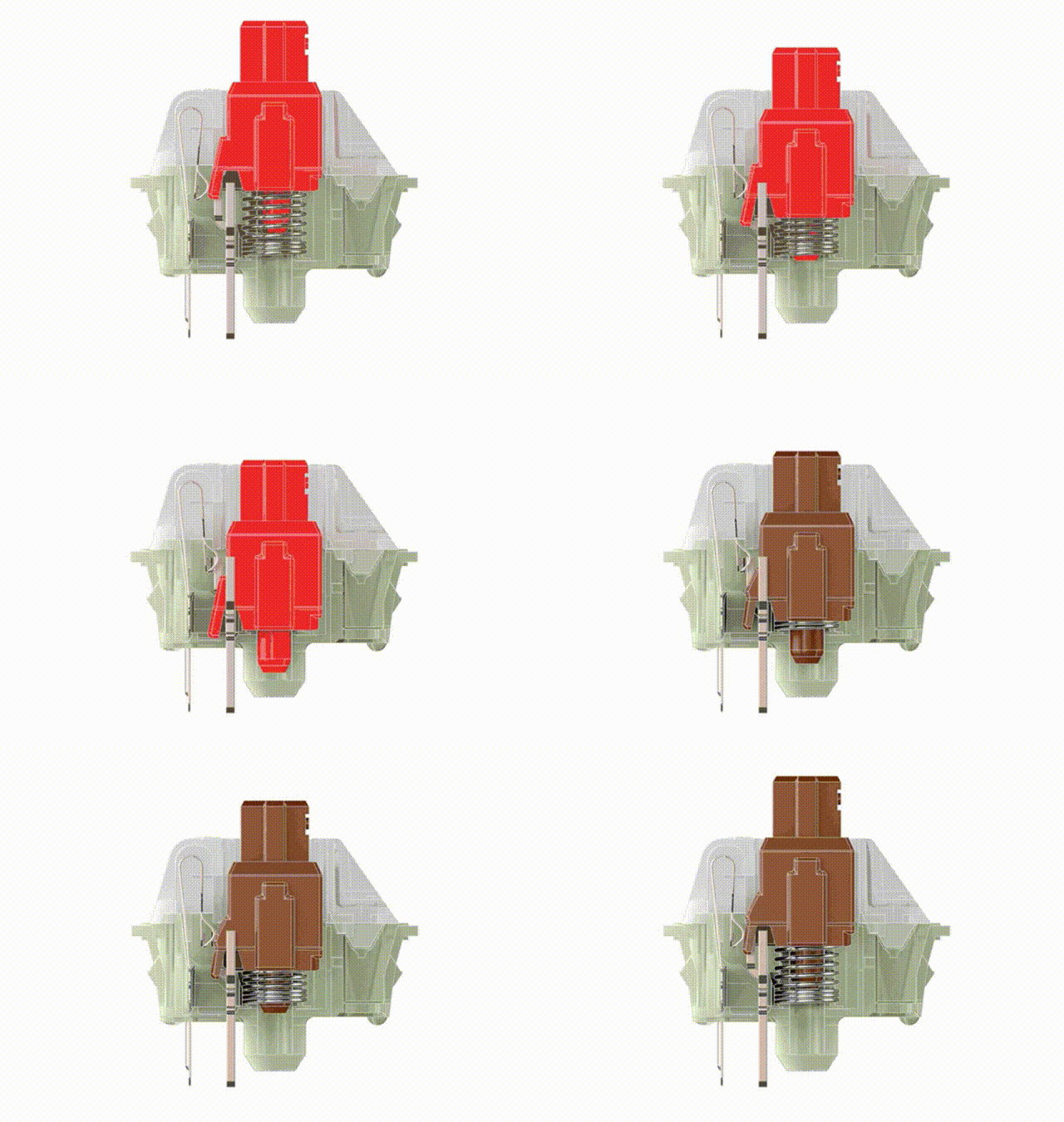
Mechanical keyboard switches directly affect performance, so many gamers and typists carefully compare linear vs. tactile switches to see which is best for their needs. This guide makes the decision easier by clarifying the differences between linear and tactile switches.
Linear vs Tactile Switches: Quick Comparison
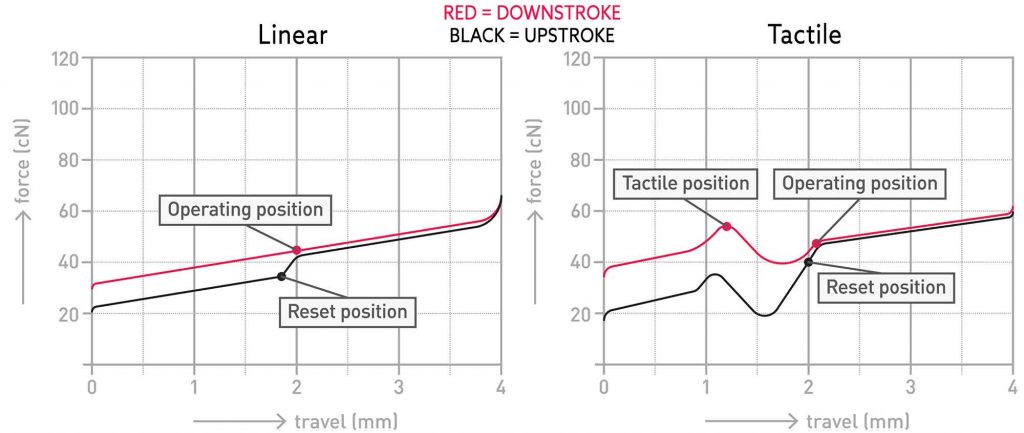
Use the table to compare the chief differences between linear and tactile switches. Coil downward for additional details.
| Linear Switches | Tactile Switches | |
| Keystroke Feel | Polish and consequent | Slight bump |
| Tactile Feedback | No | Yes |
| Sound | Noiseless | Serenity |
| Key Advantage | Speed | Accuracy |
| Best For (In Full general) | Gaming | Typing |
Linear Switches Are Shine and Consistent
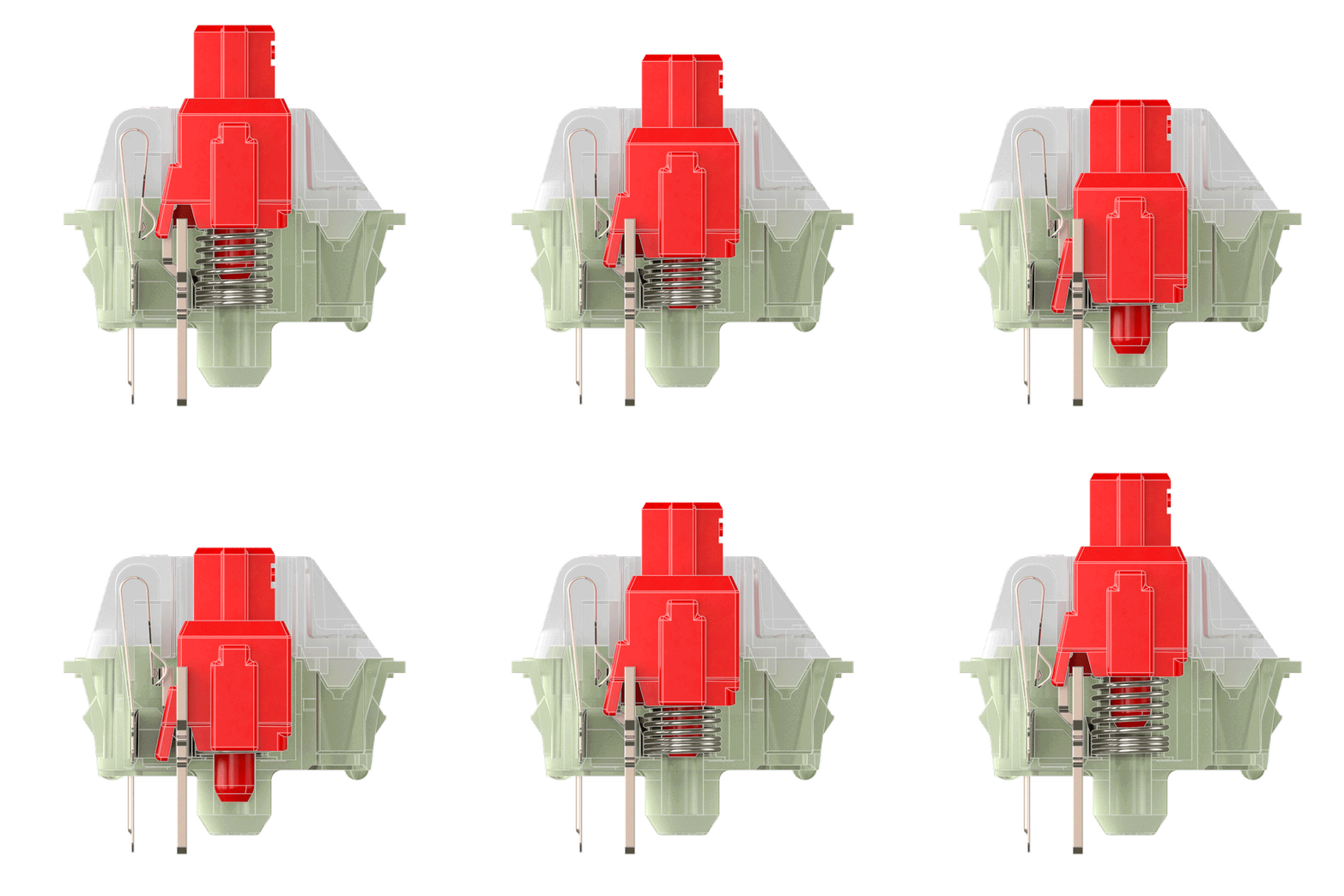
Linear switches offer a smooth, consistent bump-free experience throughout each keystroke. Many people experience those qualities make linear switches ideal for gaming when tactile feedback could slightly reduce speed and increase response fourth dimension. That's anecdotal, just it's worth noting that loftier-cease linear switches such every bit the Cherry-red MX Cherry-red and Cherry MX Speed Silvery are often regarded as the all-time for gaming and speed.
Dissimilar clicky switches, linear switches are noiseless, and so they won't bother coworkers in shared workspaces or frustrate followers during video recordings or live streams. That said, keycaps tin still clack if they're bottomed out.
The lack of feedback can stand for a learning curve for those accustomed to clicky or tactile switches, peculiarly if they don't feel their keystrokes are registering. That could lead to inaccuracies until they become used to linear switches.
Linear Switch Advantages
- Smooth, soft-touch
- Consistent keystroke
- Noiseless
- Speed
- Mostly considered all-time for gaming
Linear Switch Considerations
- No tactile feedback
- Reduced accuracy through the learning bend
Popular Linear Switches
- Red MX Blood-red
- Crimson MX Speed Argent
- Cherry MX Black
- Cherry MX Silent Red
- Ruby-red MX Low Profile Speed
- Gateron Red
- Gateron Yellowish
- Gateron Ink Blackness
- Kailh Red
- Kailh Black
Tactile Switches Offering Tangible Feedback
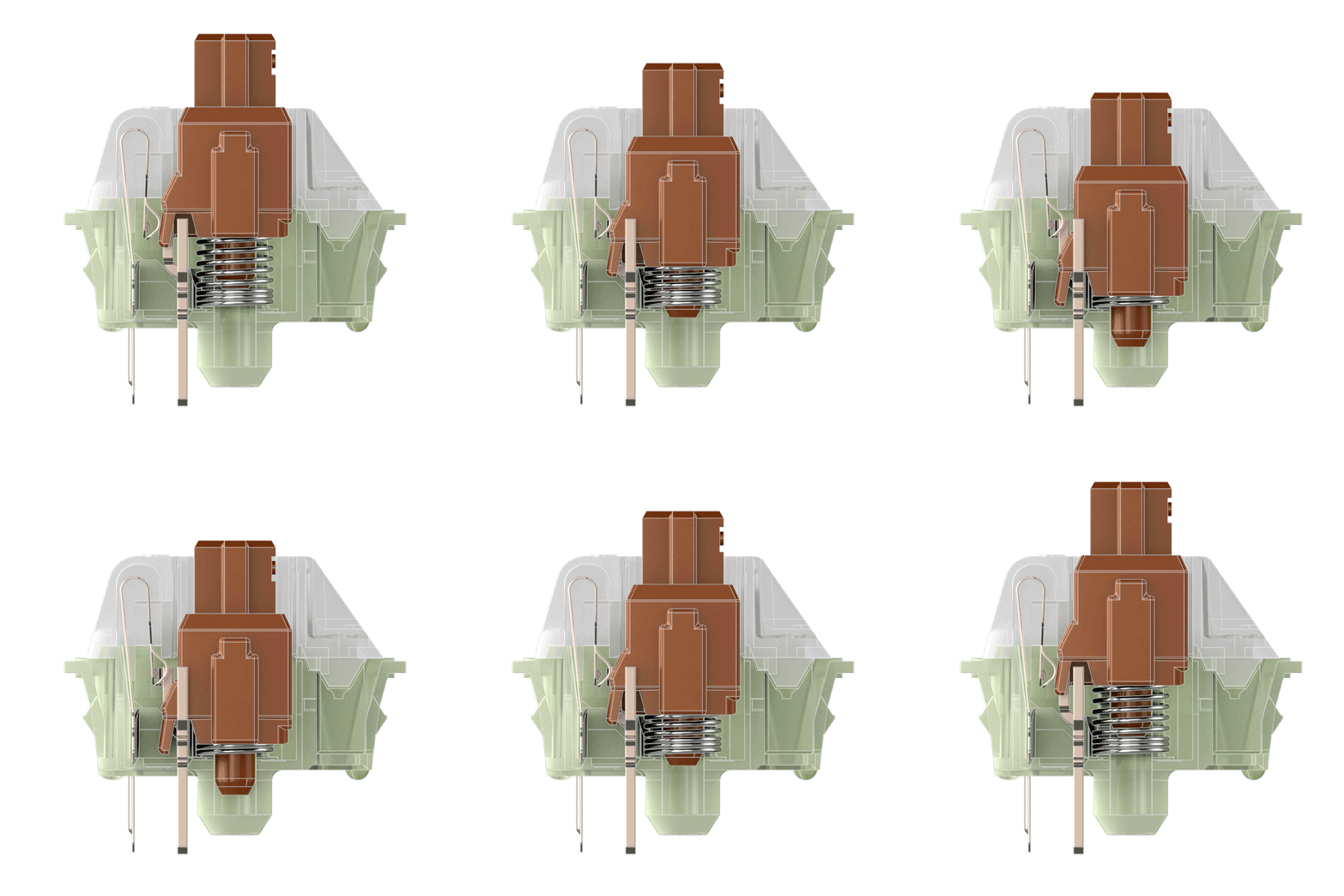
When you printing a tactile switch and feel a satisfying bump partway through the keystroke. That bump offers instant, tangible feedback that lets users know their keystrokes are registered. Tactile switches such as the Blood-red MX Brown are considered excellent for all-purpose use, and many people say the bump makes tactile switches best for typing.
Clicky switches could be considered a subset of tactile switches since they also provide feedback. Just tactile switches are repose, then they're good for shared workspaces and video recording, while clicky switches are designed to deliver an audible click that could carp others. Blood-red MX Blueish and Cherry-red MX Dark-green switches, for example, are regarded as two of the best switches for typing. Both are clicky switches with tactile feedback. Tactile switches might assistance reduce typos, especially for those with twitchy fingers, since they tell users precisely when each keystroke registers, while others experience that the tactility reduces their typing speed.
Tactile Switch Advantages
- Instant, tangible feedback
- Satisfying bump
- Quiet
- Accuracy
- Generally considered best for typing and all-purpose use
Tactile Switch Considerations
- Inconsistent feel through keystrokes
- Potentially reduced speed
Popular Tactile Switches
- Cherry MX Dark-brown
- Ruddy MX Articulate
- Reddish MX Grayness
- Das Keyboard Gamma Zulu Soft
- Gateron Chocolate-brown
- Kailh Brown
- Kaihl Speed Copper
- Boba U4
- Glorious Panda
- Durok T1
Linear vs. Tactile Switches: Common Misconceptions
Three misconceptions tend to pop up when comparing tactile to linear switches.
1. Linear and Tactile Switches Have Dissimilar Resistance
Some articles country that tactile switches have greater resistance than linear switches, which means they can deadening response times. It's of import to note that "linear" and "tactile" refer to actuation types, non resistance ratings.
For instance, Cherry-red MX Browns are tactile switches with 55 cN (centinewton) resistance. Cherry MX Blacks are linear switches with lx cN resistance. The linear switch has greater resistance than the tactile switch in this comparison.
Linear switches do tend to have less resistance than tactile switches (Red MX Reds and Scarlet MX Speed Silvers are both 45 cN), but that isn't truthful with every model.
two. Travel Distance
Similarly, some erroneously state that linear switches have less travel distance than tactile switches, making linear switches faster and more responsive. Over again, that doesn't stand true across the board in real-globe comparisons.
For example, the Cherry MX Brown tactile switch features a two.0 mm pre-travel distance and iv.0 mm full travel, the same equally two popular linear switches: the Cherry MX Red and Blood-red MX Blackness.
That said, mechanical keyboard switch manufacturers do reduce travel altitude to amend speed. The Blood-red MX Speed Silver, for instance, has a one.2 mm pre-travel altitude and three.iv mm full travel. That said, travel distance alone isn't a differentiator betwixt linear and tactile switches.
3. Colors
Reddish MX switch stems are famously color-coded by switch type, and other manufacturers such equally Gateron and Kaihl tend to use the same colors to help buyers sympathise what kind of switches they're getting:
- Linear: Red, yellowish and black stems
- Tactile: Dark-brown, grey, and clear stems
- Clicky: Blue and green stems
The color of a switch isn't e'er a reliable mode to identify a linear switch from a tactile switch. For example, the Gateron Yellowish is a linear switch, while the Glorious Panda is a tactile switch. Both take yellowish stems. Companies too make switches with stem colors not found in the electric current Cherry MX lineup, including pink, orangish, and white.
How to Choose Between Linear vs Tactile Switches
Both linear and tactile switches offer unique characteristics designed to raise mechanical keyboard operation. Though some say linear switches are best for gaming and tactile switches are all-time for typing, neither type of switch is inherently better than the other. Ultimately, the choice comes down to personal preference.
If you prefer a shine, consistent, crash-land-gratuitous, and noiseless keystroke, linear switches might be the best option. Tactile switches are a bang-up choice if you like an instant, tangible, withal tranquility feedback with every keystroke.
Do your inquiry and avoid generalizations and misconceptions that could cause you to purchase the wrong switches. If you can, give both switches a try before y'all buy. Taking them for a exam run is the best fashion to tell which type of switch yous prefer and maybe you'll find a new favorite experience for typing or coding.
Source: https://www.daskeyboard.com/blog/difference-between-linear-vs-tactile-switches/
0 Response to "Logitech Clicky Vs Tactile Vs Linear"
Post a Comment